Request your quote and enjoy 10% off your move, valid for relocations carried out up to 20 February 2026.
Moving house is always a challenge, and with children involved it can feel even more complex. At Dockx Movers, we understand that moving with children requires extra care and attention. Thanks to our years of experience, we help families make their move smooth, calm and as stress-free as possible.

Moving with children does not have to be stressful. With the right approach, it can become a smooth and even positive experience. Dockx Movers offers a family-oriented moving service tailored to the needs and rhythm of your household.
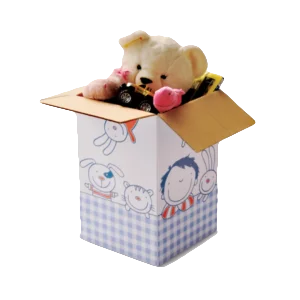
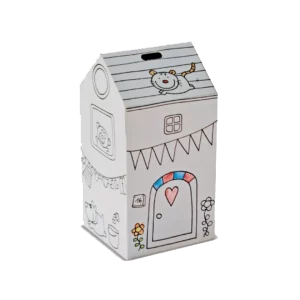
For children, moving house can be exciting but also overwhelming. By involving them in the process—such as letting them pack their favourite toys—the transition becomes easier and more enjoyable. Special moving boxes for children are the perfect tool to support this approach.
Moving house is often an exciting new chapter for children. At Dockx Movers, we understand how important it is to guide this transition in a reassuring and positive way. In collaboration with a child psychologist, the video below explains what children need to feel safe and at home quickly in their new environment. With the right preparation, involvement and a warm approach, moving can become a positive family experience.
Every move is unique, especially when children are involved. Each family situation requires a specific approach. Whether you are moving with a large family or relocating for the first time with young children, we provide a customized moving solution that feels right for you.
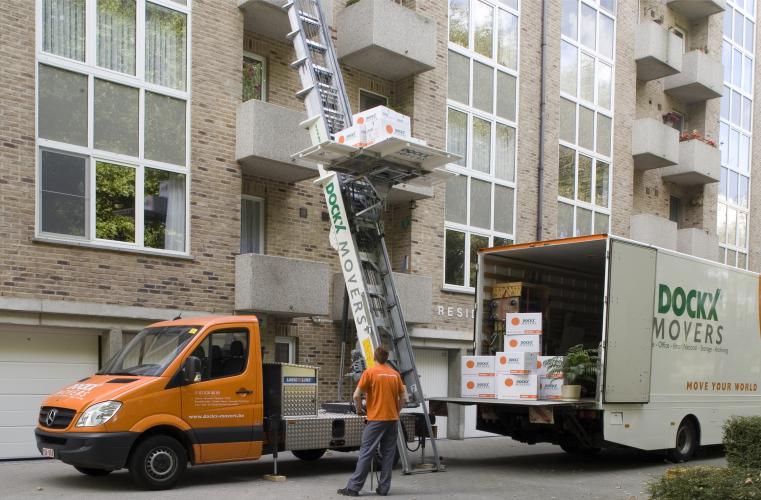
Below you will find an overview of the additional services we offer to ensure that your business relocation runs smoothly.
Moving is often exciting and overwhelming for children. Tell them what is going to happen in good time and explain in simple terms why you are moving. Involve them step by step and give them space to ask questions or express their feelings. The more predictable the process, the safer it will feel for them.
Tip: Here is a video we made in collaboration with a child psychologist who explains more about this.
Yes, at their level. For example, let children:
– Help pack their own room or belongings
– Choose which stuffed animals to take with them on moving day
– Help with labels or colors
We also offer a children’s moving box specially designed for the little ones. They can store their own stuffed animals and belongings in it and color in the fun pictures on the box itself. This gives children more control during a period of change, which provides peace of mind and involvement.
| How can I avoid stress or accidents involving children during the move? |
Children mean well, but often find themselves in the wrong place at the wrong time. During a move, heavy loads are carried and lifts are used. We therefore recommend keeping children out of the active moving area, for their safety and that of the movers.
Routine is crucial for babies and toddlers. Try to keep sleep and feeding times as normal as possible. A familiar caregiver and a calm environment help them to process stimuli better.
Talk to your children about the new and old places. Acknowledge that saying goodbye is sometimes difficult and that this is okay; this gives children the feeling that they are understood.
Explore the new house together: let them decorate their room first, maintain familiar bedtime or evening rituals as much as possible, and above all, give them time. A new house only really becomes a home when it feels safe and familiar.
No. For children, emotional peace is more important than order.
Focus first on what is important to them:
– bed
– cuddly toys
– clothes
– school or play corner
The rest can follow later.
That’s normal. Sadness, anger, or withdrawn behavior are sometimes part of change. Keep naming what you see and feel, without pushing it away. Every child processes a move at their own pace.
Moving can be confusing for young children because it changes their familiar environment. Try to explain what is going to happen in simple and concrete terms. Tell them that you are moving to a new house where you will all live together, but that many familiar things will come with you.
Use recognizable examples: their bed, stuffed animals, toys, and books will move with them to the new house. This helps children understand that their world is not disappearing, but simply moving with them.
It also helps to involve children step by step, for example by packing their room together or letting them choose which cuddly toys they want to take with them on moving day. This makes the change feel less significant and gives them a greater sense of control and security.
Saying goodbye can be difficult for children. It helps to do this consciously together. For example, take a last walk around the neighborhood, take pictures of the house, or let your child keep a small memento.
By acknowledging the goodbye and taking a moment to reflect on it, you help your child to better process the transition to the new house.
Moving stress can manifest itself in different ways in children. Some children become more irritable or emotional, while others become more withdrawn. They may also sleep less well, become angry more quickly, or suddenly need more attention.
These are often normal reactions to change. By maintaining calm, providing clear explanations, and sticking to familiar routines, you can help your child feel safe again.
That varies from child to child. Some children feel at home after a few days or weeks, while others need more time to get used to the new environment.
Familiar routines, such as bedtime rituals, cuddles, or a recognizable room, help children feel safe and comfortable in their new home more quickly.
That’s perfectly normal. Every child processes change at their own pace and in their own way. One child may be looking forward to the new house, while another needs more time to get used to it.
Try to give each child space to express their feelings and don’t compare their reactions with each other. By maintaining calm, attention, and familiar routines, you can help them find their place in the new home step by step.
Take the time to explore the new neighborhood together. For example, go for a walk, visit the park, or explore the route to school. This will help them become familiar with the area step by step.
It also helps to let children discover new places and activities, such as sports clubs or playgrounds in the neighborhood. This will help them establish new routines and make new friends more quickly.
Yes. We worked with a child psychologist and shared practical tips in a video about what children need to quickly feel safe and at home again after a move.
Calm, predictability, and involvement.
Moving doesn’t have to be traumatic. With the right approach, it can even become a positive memory. When parents are calm and in control, it gives children stability and security.
In short: calm parents make for calmer children.
A “first night” bag helps to ensure that the first evening in the new house goes smoothly. It is best to pack a few familiar and practical items, such as:
– Diapers (if still needed)
– Pajamas and a change of clothes
– A stuffed animal or favorite bedtime items
– Toiletries (toothbrush, toothpaste, hairbrush)
– A night light, if desired
– A book or storybook
This way, children will have everything they need for their bedtime routine at hand, even if not all the moving boxes have been unpacked yet.
For safety reasons, we ask that you arrange childcare for your children on moving day, if possible. Moving can be hectic and sometimes stressful, leaving little time to pay attention to young children.
If childcare is not possible, it helps to provide some familiar items and activities, such as:
– a bag with toys, books, or coloring materials
– a tablet or audio stories
– snacks and drinks
In addition, make sure there is a fixed, safe place where children can play, away from the active moving zone. This will keep the move as calm and safe as possible for everyone. Because remember, a calm parent usually means a calm child.
Tijdens een verhuis gebeurt er veel tegelijk, wat voor kinderen vermoeiend kan zijn. Probeer daarom zoveel mogelijk vertrouwde routines te behouden, zoals vaste eetmomenten, bedtijd of een voorleesmoment.
Plan indien mogelijk ook rustige momenten zonder verhuisdrukte, bijvoorbeeld door even samen een wandeling te maken of een pauze te nemen. Kleine momenten van rust helpen kinderen om alle veranderingen beter te verwerken.
Invoice address & administrative headquarters – Dockx Movers nv – Terbekehofdreef 10 – 2610 Wilrijk, België
| Cookie | Duration | Description |
|---|---|---|
| _GRECAPTCHA | 5 months 27 days | This cookie is set by the Google recaptcha service to identify bots to protect the website against malicious spam attacks. |
| _wpfuuid | 11 years | This cookie is used by the WPForms WordPress plugin. The cookie is used to allows the paid version of the plugin to connect entries by the same user and is used for some additional features like the Form Abandonment addon. |
| cookielawinfo-checkbox-advertisement | 1 year | Set by the GDPR Cookie Consent plugin, this cookie is used to record the user consent for the cookies in the "Advertisement" category . |
| cookielawinfo-checkbox-analytics | 11 months | This cookie is set by GDPR Cookie Consent plugin. The cookie is used to store the user consent for the cookies in the category "Analytics". |
| cookielawinfo-checkbox-functional | 11 months | The cookie is set by GDPR cookie consent to record the user consent for the cookies in the category "Functional". |
| cookielawinfo-checkbox-necessary | 11 months | This cookie is set by GDPR Cookie Consent plugin. The cookies is used to store the user consent for the cookies in the category "Necessary". |
| cookielawinfo-checkbox-others | 11 months | This cookie is set by GDPR Cookie Consent plugin. The cookie is used to store the user consent for the cookies in the category "Other. |
| cookielawinfo-checkbox-performance | 11 months | This cookie is set by GDPR Cookie Consent plugin. The cookie is used to store the user consent for the cookies in the category "Performance". |
| elementor | never | This cookie is used by the website's WordPress theme. It allows the website owner to implement or change the website's content in real-time. |
| viewed_cookie_policy | 11 months | The cookie is set by the GDPR Cookie Consent plugin and is used to store whether or not user has consented to the use of cookies. It does not store any personal data. |
| Cookie | Duration | Description |
|---|---|---|
| _fbp | 3 months | This cookie is set by Facebook to display advertisements when either on Facebook or on a digital platform powered by Facebook advertising, after visiting the website. |
| fr | 3 months | Facebook sets this cookie to show relevant advertisements to users by tracking user behaviour across the web, on sites that have Facebook pixel or Facebook social plugin. |
| IDE | 1 year 24 days | Google DoubleClick IDE cookies are used to store information about how the user uses the website to present them with relevant ads and according to the user profile. |
| test_cookie | 15 minutes | The test_cookie is set by doubleclick.net and is used to determine if the user's browser supports cookies. |
| Cookie | Duration | Description |
|---|---|---|
| _ga | 2 years | The _ga cookie, installed by Google Analytics, calculates visitor, session and campaign data and also keeps track of site usage for the site's analytics report. The cookie stores information anonymously and assigns a randomly generated number to recognize unique visitors. |
| _ga_2D31JQ0DGB | 2 years | This cookie is installed by Google Analytics. |
| _ga_VCGRD49VFP | 2 years | This cookie is installed by Google Analytics. |
| _gat_UA-1425433-17 | 1 minute | A variation of the _gat cookie set by Google Analytics and Google Tag Manager to allow website owners to track visitor behaviour and measure site performance. The pattern element in the name contains the unique identity number of the account or website it relates to. |
| _gcl_au | 3 months | Provided by Google Tag Manager to experiment advertisement efficiency of websites using their services. |
| _gid | 1 day | Installed by Google Analytics, _gid cookie stores information on how visitors use a website, while also creating an analytics report of the website's performance. Some of the data that are collected include the number of visitors, their source, and the pages they visit anonymously. |
| _hjAbsoluteSessionInProgress | 30 minutes | Hotjar sets this cookie to detect the first pageview session of a user. This is a True/False flag set by the cookie. |
| _hjFirstSeen | 30 minutes | Hotjar sets this cookie to identify a new user’s first session. It stores a true/false value, indicating whether it was the first time Hotjar saw this user. |
| _hjIncludedInPageviewSample | 2 minutes | Hotjar sets this cookie to know whether a user is included in the data sampling defined by the site's pageview limit. |
| _hjIncludedInSessionSample | 2 minutes | Hotjar sets this cookie to know whether a user is included in the data sampling defined by the site's daily session limit. |
| nQ_cookieId | 1 year | Albacross sets this cookie to help identify companies for better lead generation and more effective ad targeting. |
| vuid | 2 years | Vimeo installs this cookie to collect tracking information by setting a unique ID to embed videos to the website. |
| Cookie | Duration | Description |
|---|---|---|
| __cf_bm | 30 minutes | This cookie, set by Cloudflare, is used to support Cloudflare Bot Management. |
| bcookie | 2 years | LinkedIn sets this cookie from LinkedIn share buttons and ad tags to recognize browser ID. |
| bscookie | 2 years | LinkedIn sets this cookie to store performed actions on the website. |
| lang | session | LinkedIn sets this cookie to remember a user's language setting. |
| lidc | 1 day | LinkedIn sets the lidc cookie to facilitate data center selection. |
| pll_language | 1 year | The pll _language cookie is used by Polylang to remember the language selected by the user when returning to the website, and also to get the language information when not available in another way. |
| UserMatchHistory | 1 month | LinkedIn sets this cookie for LinkedIn Ads ID syncing. |
| Cookie | Duration | Description |
|---|---|---|
| _dc_gtm_UA-1425433-3 | 1 minute | No description |
| _hjSession_2871245 | 30 minutes | No description |
| _hjSession_504867 | 30 minutes | No description |
| _hjSessionUser_2871245 | 1 year | No description |
| _hjSessionUser_504867 | 1 year | No description |
| AnalyticsSyncHistory | 1 month | No description |
| li_gc | 2 years | No description |
| nQ_userVisitId | 30 minutes | No description available. |